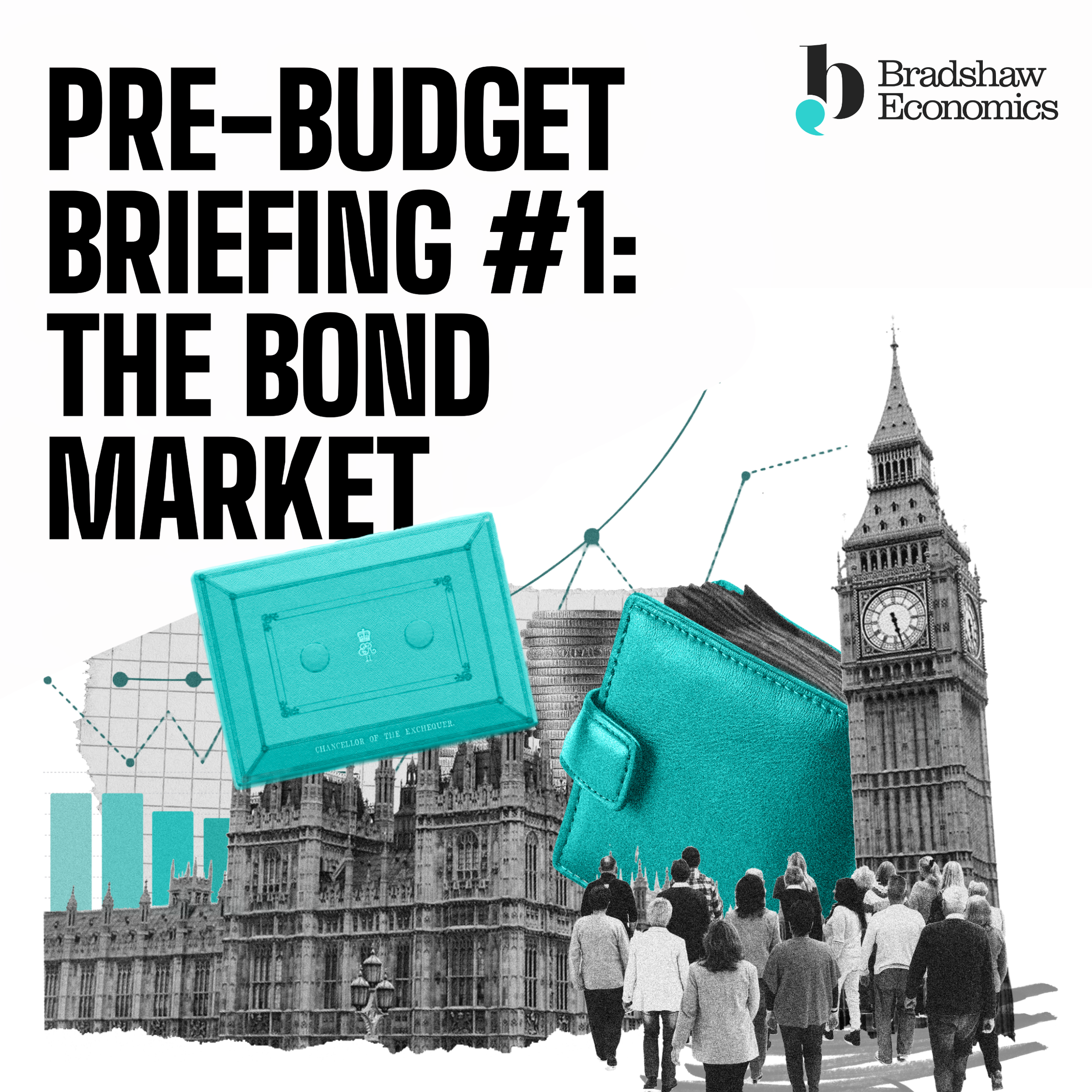
Pre-Budget Briefing #1: Britain is paying for its reputation
Over the coming weeks and ahead of John Healey’s first Budget on the 28th of October we are publishing a series of briefings from our in-house experts to help organisations to understand the Budget process and the key factors influencing the Chancellor’s decisions. This post is written by our founder Tom Lees.
This first briefing looks at the bond market and how it is already making the situation more difficult for the Chancellor.
The UK government currently spends around £130bn more that it receives in taxes and other income. We have accumulated £3 trillion (£3,000,000,000,000) of debt over the last 50+ years (particularly after the 2008 financial crash and Covid-19).
Where a person needing to borrow money will get a loan from the bank the UK government issues ‘gilts’ (which to confuse things are more generally called ‘bonds’ in other countries).
A gilt is simply a loan to the Government. Investors (very likely including you through your pension) buy them in return for effectively interest payments (again to confuse things called a ‘yield’) and their money back at the end of its ‘term’ (e.g. 10 or 30 years).
Last week, the yield on 30-year UK government debt briefly reached 6.02%, its highest level since 1998.
Britain became the first major global economy to reach 6% on long-term debt since Italy during the eurozone crisis in 2012.
This is not a comfortable position for a government promising to spend more money, not return to ‘austerity’ and very high levels of taxation to be in.
While it would be politically convenient for some to blame all of this on Andy Burnham, but that would be wrong.
The latest rise in borrowing costs have been seen in many high-income countries.
Higher energy prices (driven by the conflict in the Middle East) and renewed inflation concerns (last week inflation in the Eurozone hit 3.8%) have pushed up the cost of government borrowing.
However, the UK is paying an additional price to borrow compared to similar countries which suggests less confidence that we have our finances under control and that we are able to repay our debts.
Bloomberg Economics estimates that it costs the UK about an extra 30 basis points, or 0.3 percentage points, to borrow money. While this sounds small it translates into £2.5bn in annual debt costs by 2030.
Investors remember the disruption after the Brexit vote, the Liz Truss’s mini-budget and have been watching closely what the Labour government plans in terms of spending.
They also remember repeated promises that the public finances will improve a few years down the line. Eventually, they want to see those promises delivered.
There are structural problems too. Pension funds have traditionally been reliable buyers of gilts but this position has changed due because of better funded pension schemes and shift in the sort of pension scheme most people have.
The Government does not suddenly need to pay 6% on all its debt. Higher borrowing costs only feed through as new debt is taken out and the old debt is refinanced.
But the pressure is going to steadily build. Borrowing in the first five months of this financial year was already £8.1bn above the OBR’s forecast. More spent on paying debt interest means less cash for other things the government wants to spend on.
For John Healey, this creates a difficult political test. Burnham has set out an ambitious programme for a much more interventionist and expanded state. The Chancellor now has to play the bad guy and show which commitments can be afforded, when they can happen and who is going to have to pay even more tax.
The classic approach taken by Chancellors is to cut or delay spending on infrastructure and buildings. But as our recent report with the Public Private Partnership Commission showed we’re already facing a £258bn shortfall in infrastructure spending due to many years of under investment and not unlocking enough private money.
Rebuilding trust in the UK’s ability to pay its way will take time and tough decisions that also do not impact growth or put off investors.
The Budget will be judged on whether its promises look deliverable and then whether ministers can stick to them afterwards.